ServicesWhole-Home Filtration
Whole-Home Filtration in Lakeway
One system goes on your main water line, and the chlorine taste and smell are gone at the kitchen sink, the showers, the washer and the ice maker. We test first, match the equipment to your house and pipes, and tell you plainly what it won't fix.
How whole-home filtration works
Treated city water is made safe to drink. That doesn't mean it tastes good. The chlorine that keeps germs out of miles of pipe is what you notice in a glass from the tap and in the steam of a hot shower.
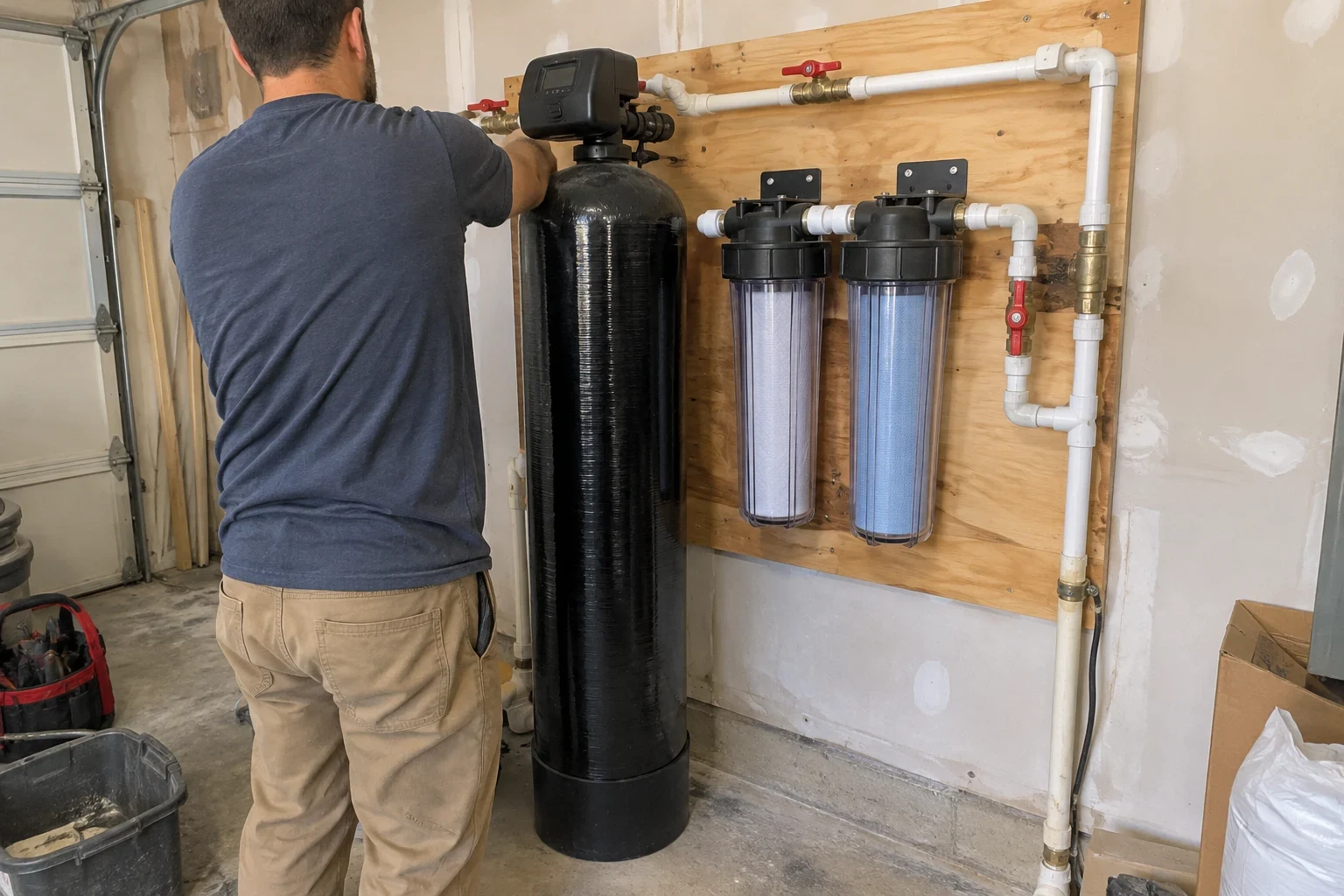
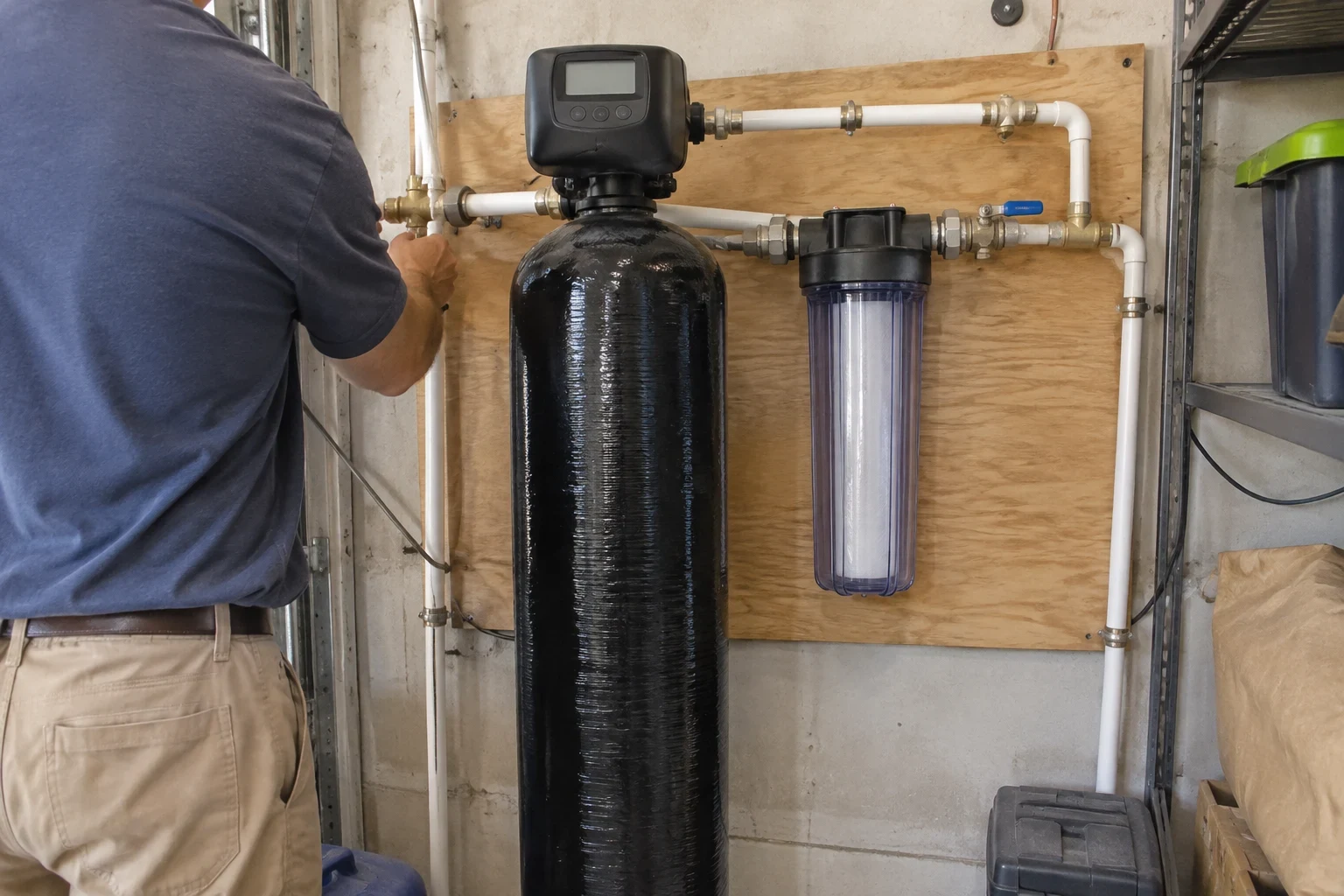
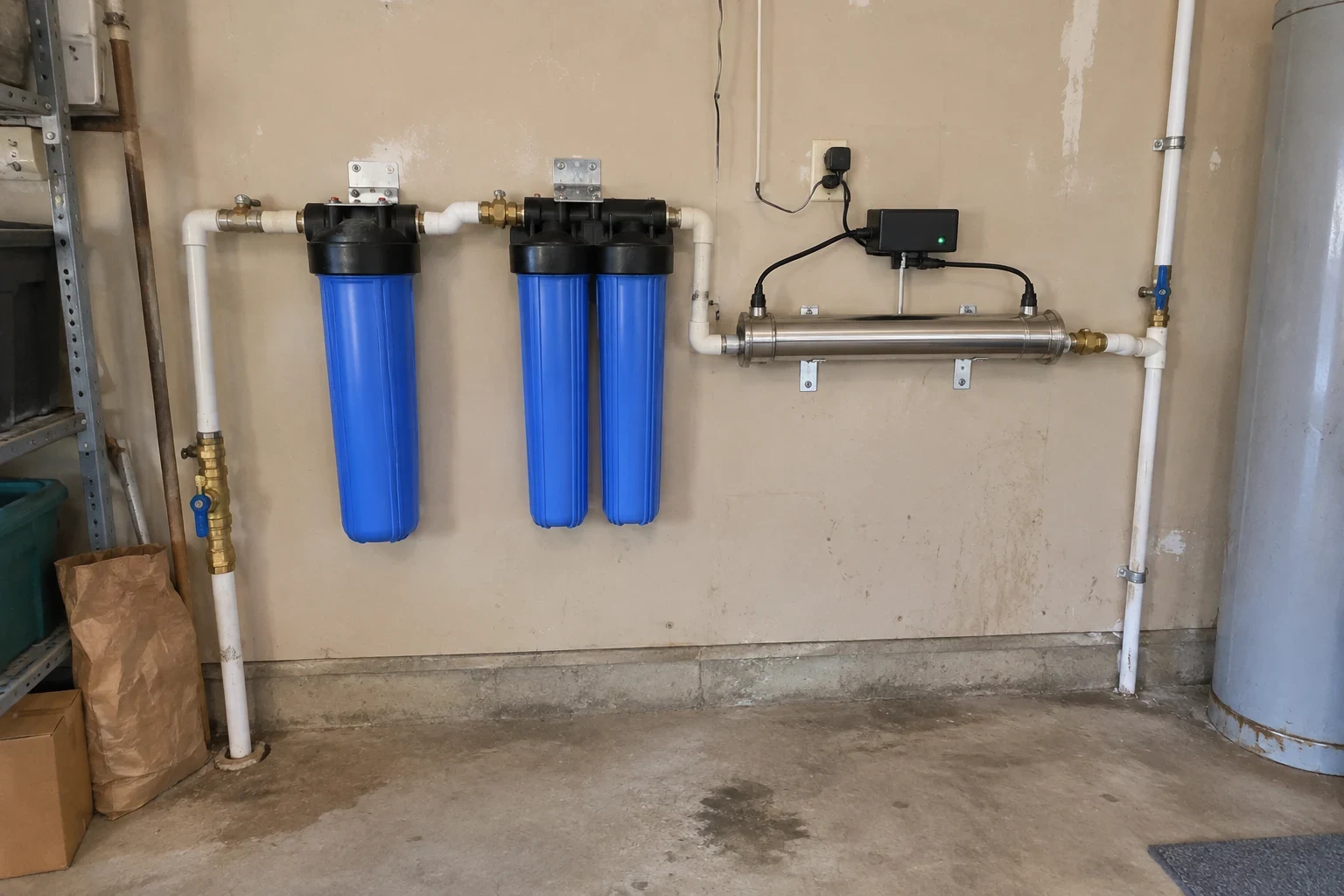
The system goes in where water enters your home, most often in the garage close to the main shutoff valve. First a sediment stage catches particles. Then the water runs through a tank of carbon media that holds onto chlorine and many of the compounds behind bad taste and odor. From there it feeds the whole house, not one faucet.
Pick it when the taste, smell or grit shows up all over the house. A carbon filter doesn't soften water. If what bugs you is white crust on fixtures and cloudy glassware, we'll say so and steer you toward a salt-free water conditioner or water softener installation rather than the wrong equipment.
What's part of the job
- Testing comes first
- Before we suggest anything, we check your tap water for chlorine, hardness, iron, pH and total dissolved solids. The numbers decide the equipment. Sometimes they point to a smaller setup than you expected.
- Sediment stage up front
- Ahead of the main tank goes a cartridge that grabs sand and flakes of rust. With that grit caught early, the carbon lasts longer and your faucet screens and showerheads stay clear.
- Carbon tank matched to your use
- We size the tank by how many bathrooms you have and how many taps run at once. An undersized tank burns through its media fast and can leave the shower weak.
- Bypass and shutoff valves
- With the bypass, water can skip the system while a cartridge gets swapped or a plumber works on a line. Your home never loses water during that time.
- Installation at no charge
- Installation is free. Your cost is the equipment you choose, and we give you that number by phone or at the test before any work gets scheduled.
- Show-and-tell, then cleanup
- Before we leave, we show you where the bypass handle and prefilter housing are and explain when parts need changing. We haul off the packaging and wipe down the area where we worked.
Signs your home could use one
Showers smell like a pool
Hot water releases chlorine into the air, and a closed-up bathroom holds onto it. Treating water at the main line takes care of that in every shower you have.
The tap goes unused
When the family buys cases of bottled water or keeps refilling jugs because tap water tastes wrong, filtering the main line usually solves it more simply.
Specks in screens and showerheads
Small particles collecting in faucet aerators tell you sediment is coming through the pipes. A prefilter stops it before it gets to your fixtures and appliances.
Fridge cartridges wear out fast
If the refrigerator filter slows down well ahead of its change date, it's doing more work than it was made for.
Only one tap gets filtered
A pitcher or under-sink unit covers the kitchen. The showers, washer and ice maker are still running on unfiltered water.
What moves the price
We can't quote one flat number, because no two houses or water supplies match. Your test results and a look at the plumbing answer most of the questions. Since installation is free, nearly all of the cost comes down to the equipment.
House size and bathrooms
Each extra bathroom adds to the water flowing at the same moment. Bigger demand means a bigger tank and wider valves so pressure holds steady.
Type of media
Regular carbon does a good job on chlorine. Catalytic carbon is pricier, and it earns that cost with some disinfectants and stubborn odors. The test tells us which one your water needs.
Where the main line is
If the builder left a plumbing loop in the garage, the tie-in goes fast. A line running under the slab or hidden behind finished drywall takes more labor and more fittings.
Pairing with other treatment
Sometimes the test also turns up high hardness, and a conditioner or softener makes sense next to the filter. We'll give you a price on both together and on the filter by itself, so you can weigh them side by side.
How the work goes
- 1
Free test and a look at the plumbing
We run the water test and find the spot where your main line enters. Around Lakeway that's often the garage, and some builders left a loop ready for a filter, which makes the install easy.
- 2
Straight recommendation
We walk through the results with you and suggest a system, or tell you plainly that a filter won't fix what you're seeing. Your quote comes by phone or in person, written out with each piece of equipment listed.
- 3
Install day
Expect the water to be shut off for a few hours. We set the tanks, connect to the main line, put in the bypass and inspect each joint for drips. If your area calls for a plumbing permit, we handle pulling it.
- 4
Flush and retest
Fresh carbon media gives off fine dust at first, so we flush it out. Then we run the faucets through the house and test again, so you can compare the before and after numbers yourself.
Whole-home filtration questions
Will a whole-home filter stop hard water spots?
No. Carbon lets calcium and magnesium pass right through, and those minerals are what leave scale. If the test shows hard water, a salt-free conditioner or a softener handles that job. Plenty of homes run a filter and one of those together.
Will my water pressure drop?
It shouldn't, as long as the system fits the house. A pressure drop usually means the tank is too small or the prefilter cartridge is clogged and past due. We size by how many fixtures you have and how much water runs at peak times, so your shower feels like it always did.
How often does it need service?
Plan on swapping the sediment cartridge two to four times a year, more if your water carries a lot of particles. The carbon media in the main tank lasts for years. We'll give you a schedule that fits your water and the size of your household.
Do I still need a drinking water system?
Most families drink straight from the tap once the chlorine is out. If you'd like another layer of filtering for drinking and cooking water, a reverse osmosis system under the kitchen sink does that. It's an add-on you can choose, not something you need.
Is installation really free?
Yes, installation is free. The only charge is the equipment, and you'll know that number before anything goes on the calendar.
Find out what's in your water first
A short phone call sets up a free water test at your home. You'll see the numbers and get a straight answer on whether a whole-home filter fits.