ServicesReverse Osmosis
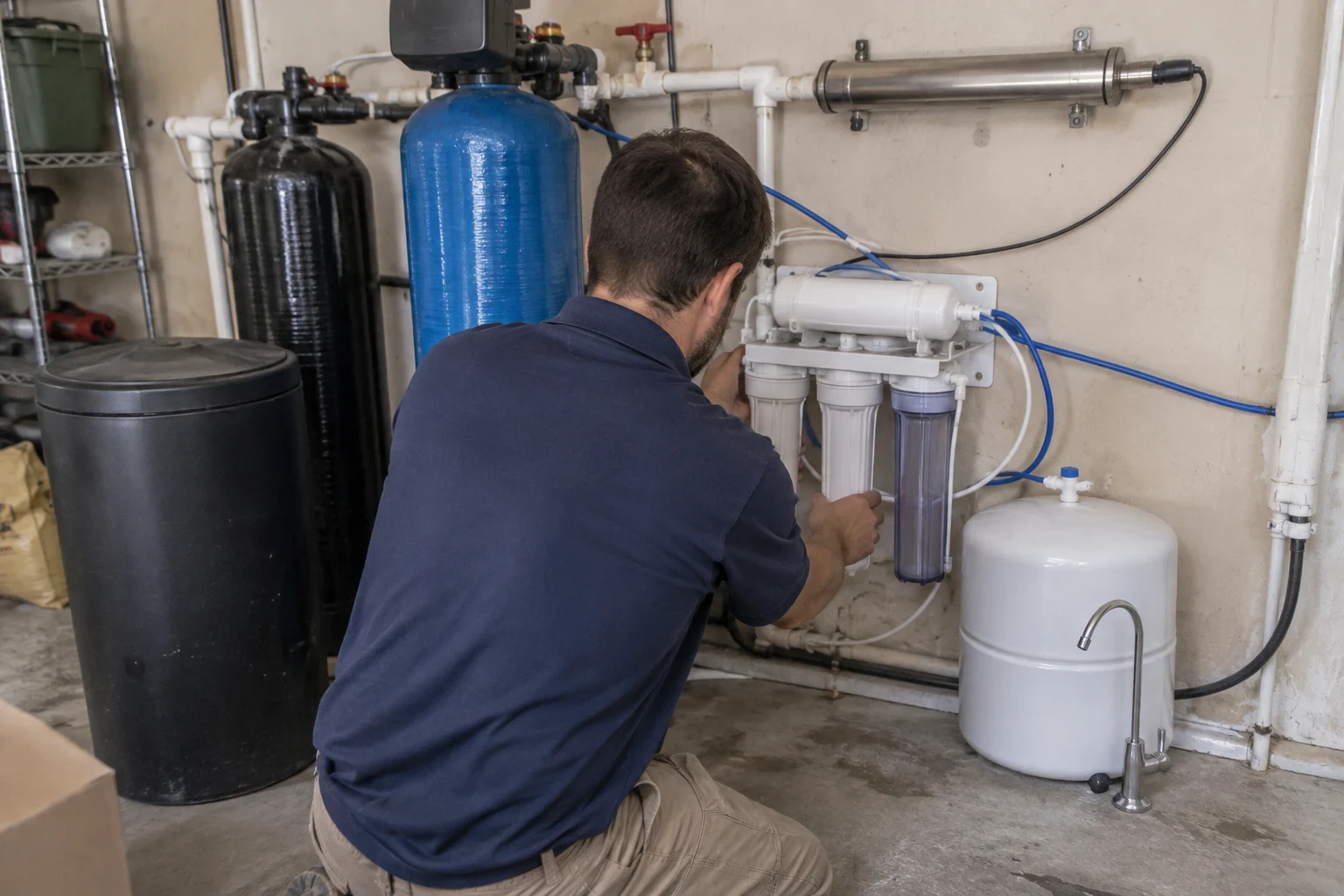
Reverse Osmosis Systems in Lakeway
An RO system adds its own tap next to your kitchen sink for clean, good-tasting water to drink, brew coffee and cook with. Before we recommend anything, we check what is coming out of your tap and size the unit to those readings. You pay only for what your water needs.
How Reverse Osmosis Works and Who It Suits
An RO unit pushes water through a membrane whose pores are far too small to see. It stops most dissolved salts and minerals and many trace contaminants, then flushes them to the drain while clean water goes on to your faucet. Carbon stages before and after the membrane take care of sediment and chlorine taste and smell.
RO serves one spot in your home, nearly always the kitchen sink. The water to your showers, washer and water heater doesn't change. That makes it best for better drinking and cooking water. If spotted shower glass or scale in the water heater also bothers you, whole-home filtration or a softener deals with that, and RO can go in after.
Hill Country water often carries plenty of minerals, and hard water wears an RO membrane out sooner. Your water test includes hardness, so we can tell you straight whether RO can manage on its own or needs treatment ahead of it.
What Your RO Install Includes
- A water test before anything else
- We check dissolved solids, hardness, chlorine and pressure at your tap. Those numbers decide the system, not a sales sheet.
- Filters, membrane and storage tank
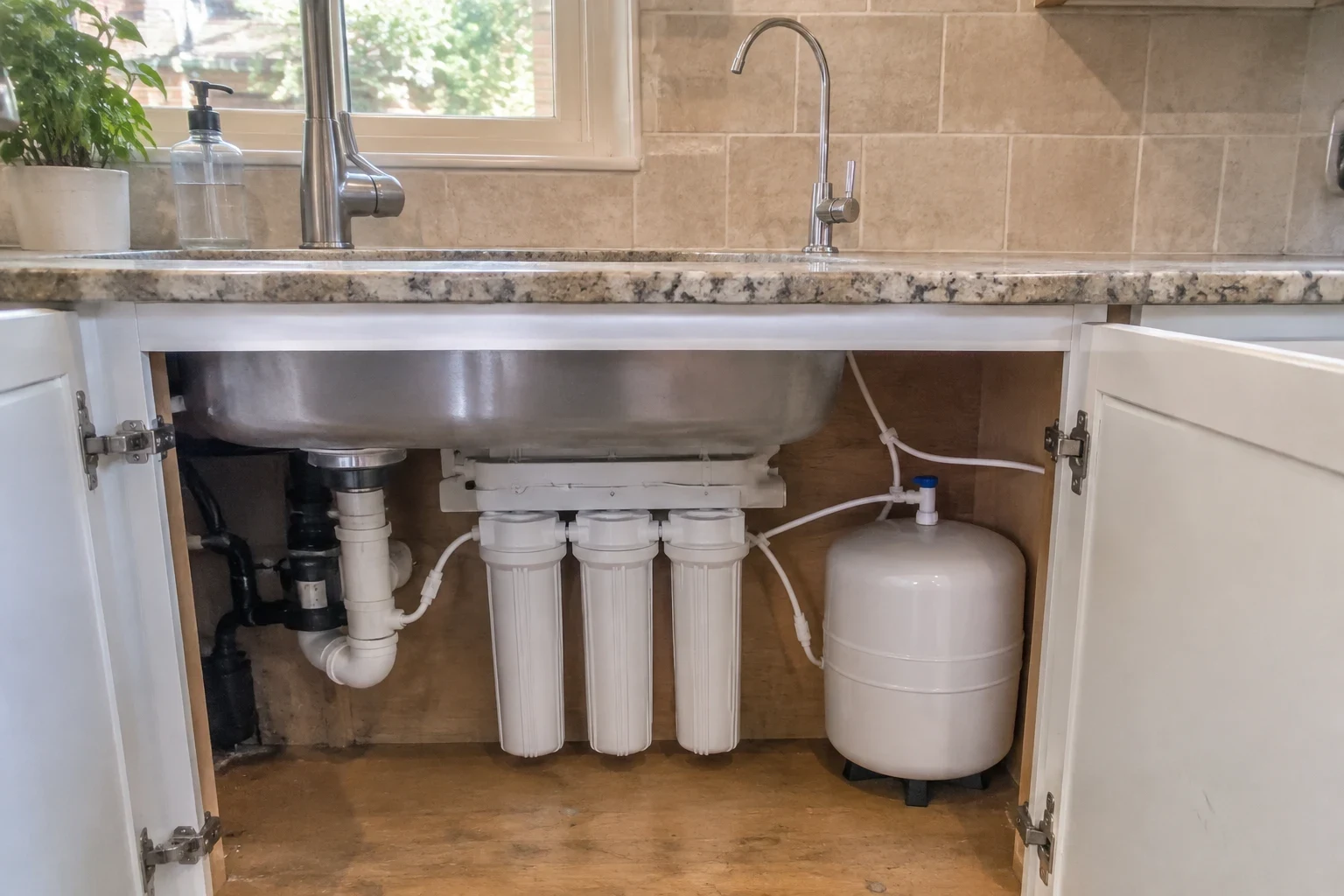
- Sediment and carbon prefilters, the RO membrane and a post-filter for taste. Most units mount under the sink with a small storage tank beside them.
- Its own faucet for drinking water
- If your sink already has an unused sprayer or soap dispenser opening, we put the RO faucet there. When granite or quartz needs a new hole, we tell you first and drill it with a bit made for stone.
- Proper drain and feed connections
- A feed valve on the cold line and a drain saddle on the sink drain, set up so wastewater runs out cleanly and does not back up.
- A tube to the refrigerator, if you like
- We can tie the fridge dispenser into the RO unit so the cold water and ice come from the same filtered supply. Ice turns out clearer and loses that tap-water taste.
- Start-up, flush and cleanup
- We flush the system, check for leaks and test the water before and after so you see the difference. Then we clean up the cabinet and the floor.
Signs an RO System Would Help
You buy cases of bottled water
If you are hauling jugs home every week just to have something you like drinking, an RO tap ends that chore.
Chlorine taste in coffee and tea
A treated-water taste that comes through in hot drinks is a common reason people call us. The carbon stages in an RO system take it out.
White crust on the kettle and coffee maker
Scale in small appliances means minerals in the water. The membrane pulls out the bulk of them before the water reaches your glass or your pasta pot.
Cloudy ice cubes
Cloudy ice that leaves residue in your glass usually points to dissolved solids. Running RO to the ice maker fixes it.
Worry about old pipes
Older fixtures and pipe solder can add lead to water that sits in them overnight. If that is on your mind, an RO tap gives the kitchen a solid extra layer of protection where it counts most.
What Sets the Price
What an RO system costs depends on your water and your kitchen, so the quote comes after the test. We install it free, and the quote lists the system and each extra separately.
Tank or tankless
Our 5-stage tank reverse osmosis system (sediment, GAC, carbon block, RO membrane and post carbon, plus a storage tank under the sink) costs less and fits in most cabinets. Our tankless reverse osmosis system (800 gallons per day, 7 stages) takes less room and fills a glass faster, but it costs more to start.
Remineralizing cartridge
This add-on stage returns a little calcium and magnesium after the membrane, which shifts the taste slightly. Some people want it and some leave it off.
Hard water and low pressure
With very hard water, a softener or conditioner before the RO may be needed to protect the membrane. Weak water pressure can call for a small booster pump.
Counters and added lines
Stone counters take longer and more care to drill. A line to the fridge or another faucet means more parts and labor.
How the Job Goes
- 1
Free water test
We come out, test your water and look under your sink. You get the readings and a straight answer on whether RO is a good fit.
- 2
Written quote by phone or in person
We tell you which system we recommend, why, and what any extras like a fridge line or pre-treatment add. No pressure to decide that day.
- 3
Install day
Most installs take a few hours. We shut off the cold water under the sink, mount the unit, set the faucet and make the drain and feed connections. Your water is back on before we leave.
- 4
Check and walk-through
We flush the system, check every fitting for drips and show you the before-and-after readings. We also show you which filter goes where and when it needs changing.
Common Questions About RO
How much water goes down the drain with RO?
The membrane has to be rinsed constantly to carry off what it blocks, so some incoming water goes to the drain. How much depends on the model and your home's pressure. Newer units use far less rinse water than older ones, and we can show you the more efficient models.
Does RO water taste flat?
RO water tastes very clean, and to some it seems a little plain. For more body, a remineralizing cartridge adds back a small amount of minerals. We can share which option most people choose after tasting it.
When do the filters get replaced?
Expect to change the prefilters and post-filter about once a year. The membrane lasts longer, usually a few years. Heavy use or hard water shortens that, which is another reason we test first.
Is RO or whole-home filtration better for me?
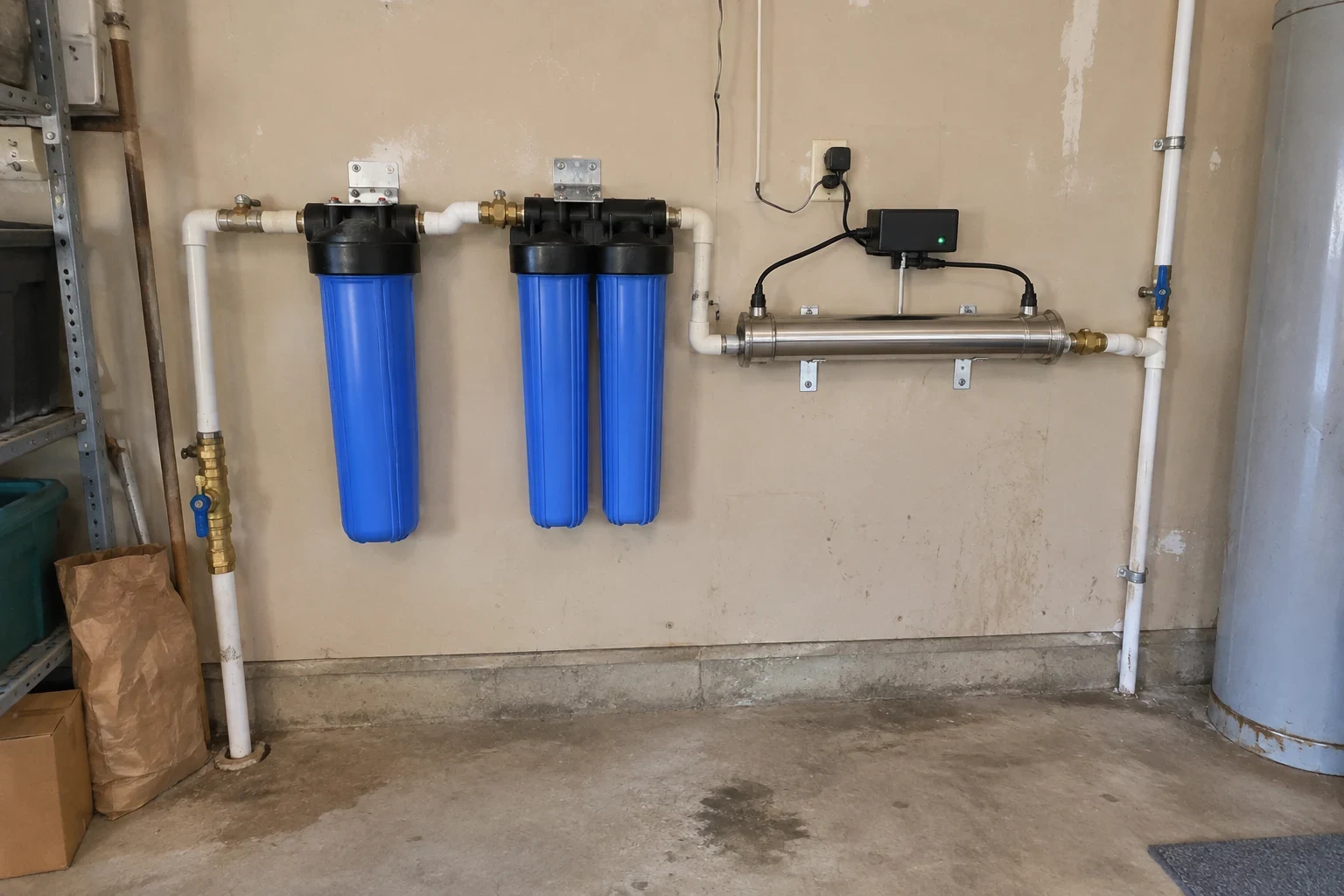
RO cleans drinking and cooking water at a single tap. Whole-home filtration covers every faucet, shower and appliance. Many homes in Lakeway and Bee Cave have both: the whole-home system handles taste and sediment, and RO polishes the drinking water.
Is there room under my sink?
Most kitchen cabinets fit one, garbage disposal and all. When space is tight, a tankless unit or a different arrangement usually works. We check under the sink at the water test so nothing surprises us on install day.
Test Your Water Before You Decide
Your water test is free, and we'll tell you if reverse osmosis suits your home. If it does, you get an easy-to-read quote and a tidy install.