ServicesIron and Sulfur Removal
Iron and Sulfur Removal in Lakeway
Rust rings in the toilet, orange streaks on the shower glass, water that smells like rotten eggs. We test your water first, find where the iron or sulfur is coming from, and then fix that problem, not a guess.
Stains and smells have a source. We find it first.
Iron and sulfur don't behave the same, so we don't treat them the same. Dissolved iron runs clear from the faucet, then turns orange once air gets to it in a sink or toilet. Sulfur comes from hydrogen sulfide, a gas that smells like rotten eggs, and it's strongest in the first few seconds the tap runs.
Sometimes your supply is fine. When the odor only comes from hot water, the usual culprit is the anode rod in the water heater reacting with bacteria. A filter won't touch that, and we'll say so up front. Long Texas summers keep heaters and pipes warm, and that warmth helps those bacteria along.
If the test does find iron or sulfur in the water coming into your home, we size the filter to the levels we measured and to how much water your family goes through.
What the work includes
A free water test
We measure iron, hydrogen sulfide, pH and hardness right at your tap. pH counts because it decides which filter media can do the job.
Hot and cold side checks
We test and smell the water from both sides. That tells us whether the trouble starts in your supply or inside the water heater.
A filter matched to your numbers
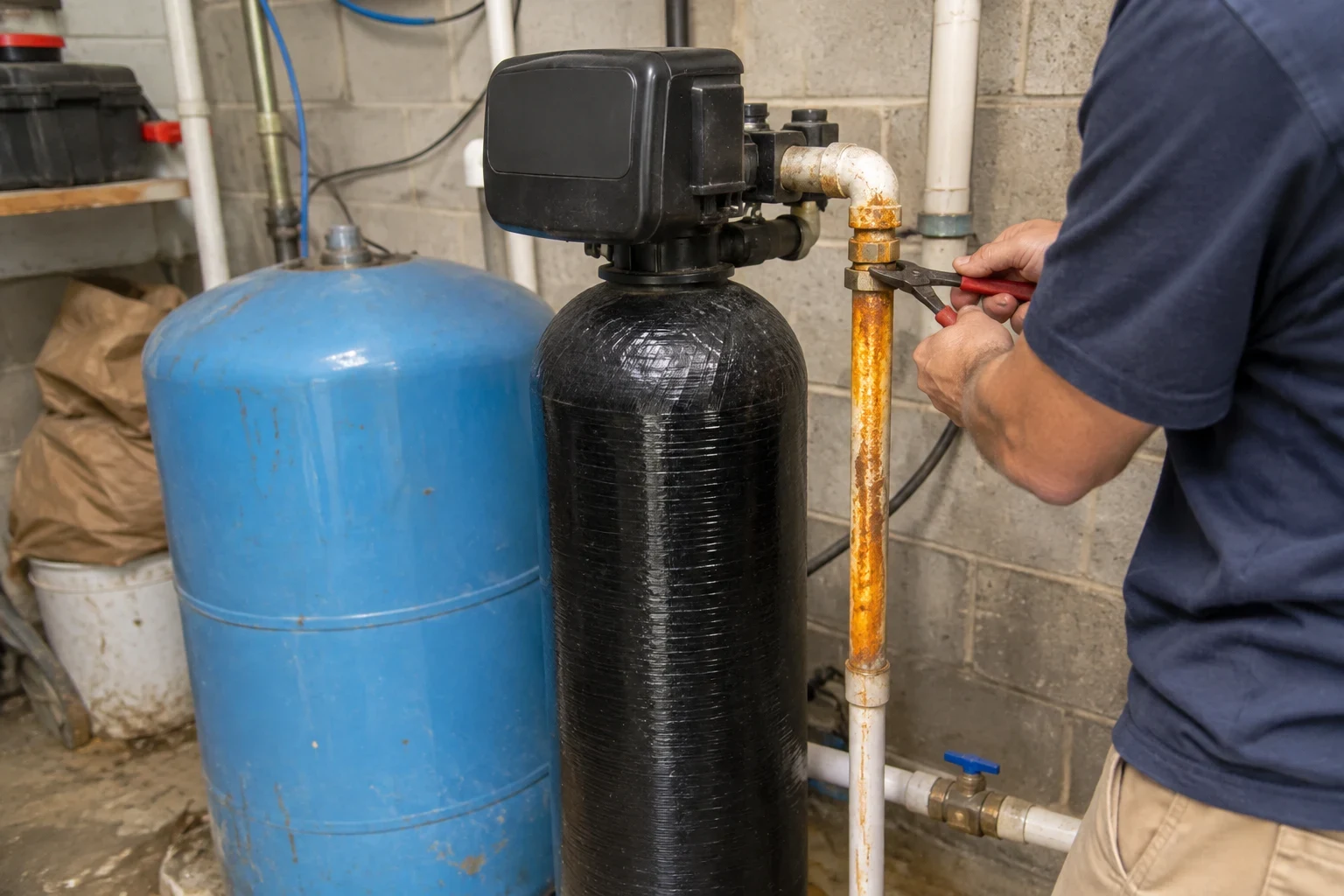
Light sulfur is usually handled by catalytic carbon. Heavier iron and sulfur often need an air-injection filter that turns them into particles and flushes them out. We tell you which one fits and why.
Point-of-entry install
The filter goes on the line right where water comes into your home, and we add a bypass valve so it can be shut off for service. There's no charge for installation.
Setup and a walk-through
We set the backwash timer, test the water after install and show you how the unit works.
How iron and sulfur show up in your home
Marks that keep coming back
Reddish rings in the toilet bowl, streaks under the sink faucet and tub marks that return a few days after you scrub them.
Water that smells like eggs
You catch a sulfur odor when a faucet opens or the shower starts. If you only smell it on the hot side, check the water heater before anything else.
Yellowed whites
Towels and white shirts come out of the wash dull or spotted. Bleach tends to lock iron marks deeper into the fabric.
A metal taste in drinks
Coffee, tea and ice cubes taste off, and a glass of water may look slightly cloudy or tinted.
Slick film in the toilet tank
A slimy, reddish coating inside the tank often points to iron bacteria. That calls for a different fix than plain dissolved iron.
How a job day goes
- 1
Test and talk
We test your water, look over the plumbing and the water heater, then sit down with you and go through the results.
- 2
Your quote, in plain terms
The quote spells out the system, the parts and what upkeep will look like. If something cheaper will fix it, like a new anode rod in the water heater, we tell you.
- 3
Install
Most jobs are done in a few hours. Your water is off only briefly while we tie in, and we lay drop cloths around the work area near the main line or in the garage.
- 4
Flush and retest
We flush the lines, test the water at a faucet and clean up before we go. Old stains on fixtures still need scrubbing, but new ones should stop showing up.
What sets the price
The price comes down to what your test shows and how the plumbing in your home is laid out. After the test, we give you the whole number, by phone or in person, before anything gets installed.
- How much iron and sulfur you have
- Light readings often clear up with a basic catalytic carbon unit. Heavy readings call for an air-injection filter and a larger media bed, which costs more.
- How much water you use
- More people and more bathrooms mean a bigger tank. Undersize it and the pressure sags when two showers run at once.
- Getting to the main line
- A supply line that's easy to reach in the garage is a shorter job. If we have to reroute pipe to find room, that adds time and parts.
- Anything else the test turns up
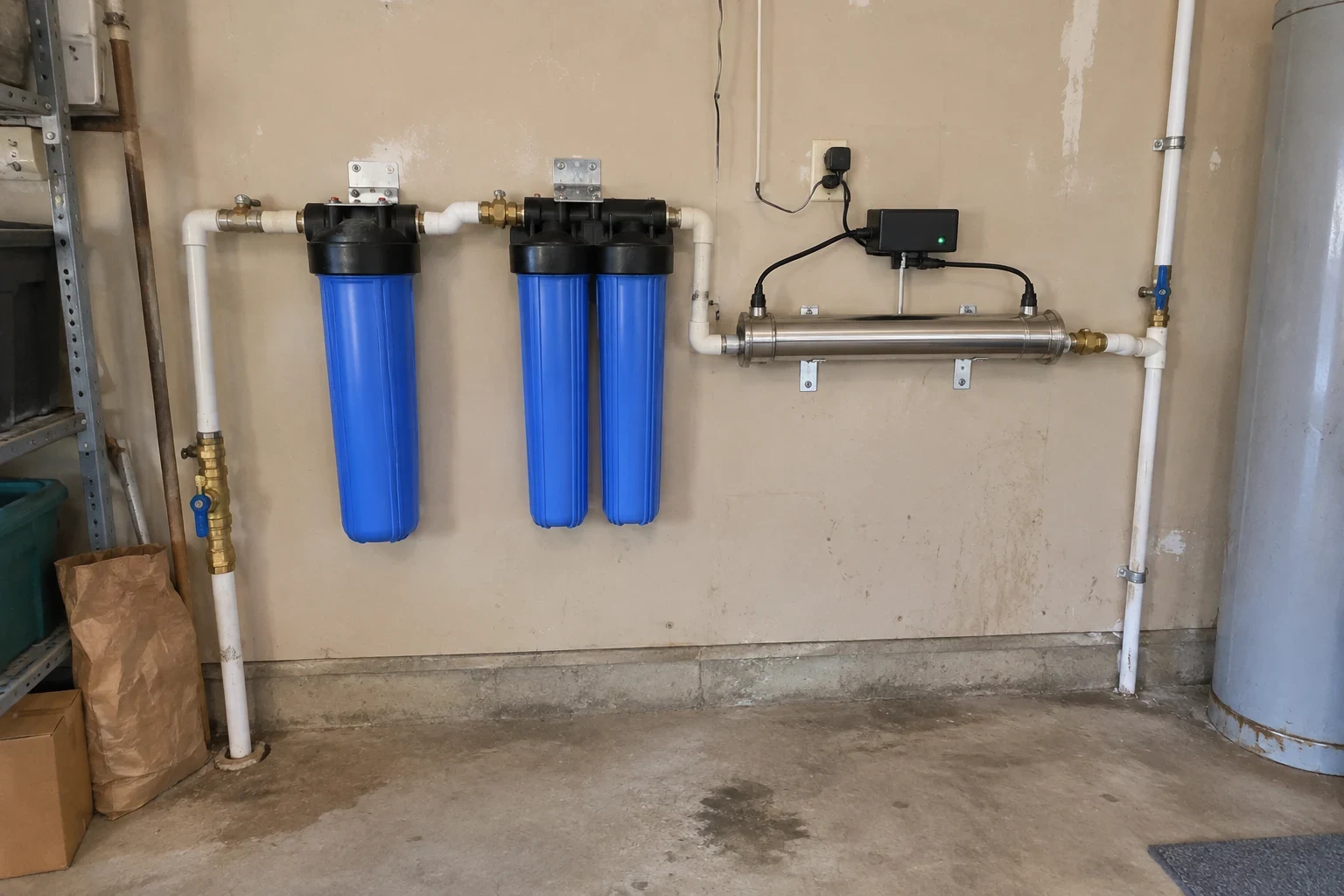
- Hardness or bacteria in the same sample may mean pairing the filter with a softener or UV water purification. We'll show you the readings so you can decide.
Iron and sulfur questions
Something not covered here? (512) 883-1270
Why does my water only smell bad from the hot tap?
Most of the time the water heater is to blame, not the water coming in. Bacteria inside the tank react with the magnesium anode rod and give off hydrogen sulfide. A new rod or a tank flush often takes care of it, and we check for this before we talk about any filter.
Can a water softener remove iron?
It can handle a little dissolved iron, but that's about it. It does nothing for sulfur, and heavier iron coats the resin until the softener stops working well. If your numbers show more than a trace of iron, a filter built for iron is the better buy and holds up longer.
Will the filter remove the stains I already have?
No. The filter keeps new stains from forming. Old stains on fixtures and grout need an iron stain cleaner, and once the system is running they shouldn't come back.
How much upkeep does an iron filter need?
Not much. The unit cleans itself on a timer, usually overnight. The media wears down over a span of years, and we'll show you what to look for at install.
Do I need a test if I can already see the stains?
We'd still test. A stain says iron is present, but not the amount, and it can't tell you about sulfur, low pH or bacteria. Those readings decide which filter will work, and the test costs you nothing.
Find out what's in your water
We'll test your water at no charge and tell you if a filter is the right fix. If it is, installation is free.