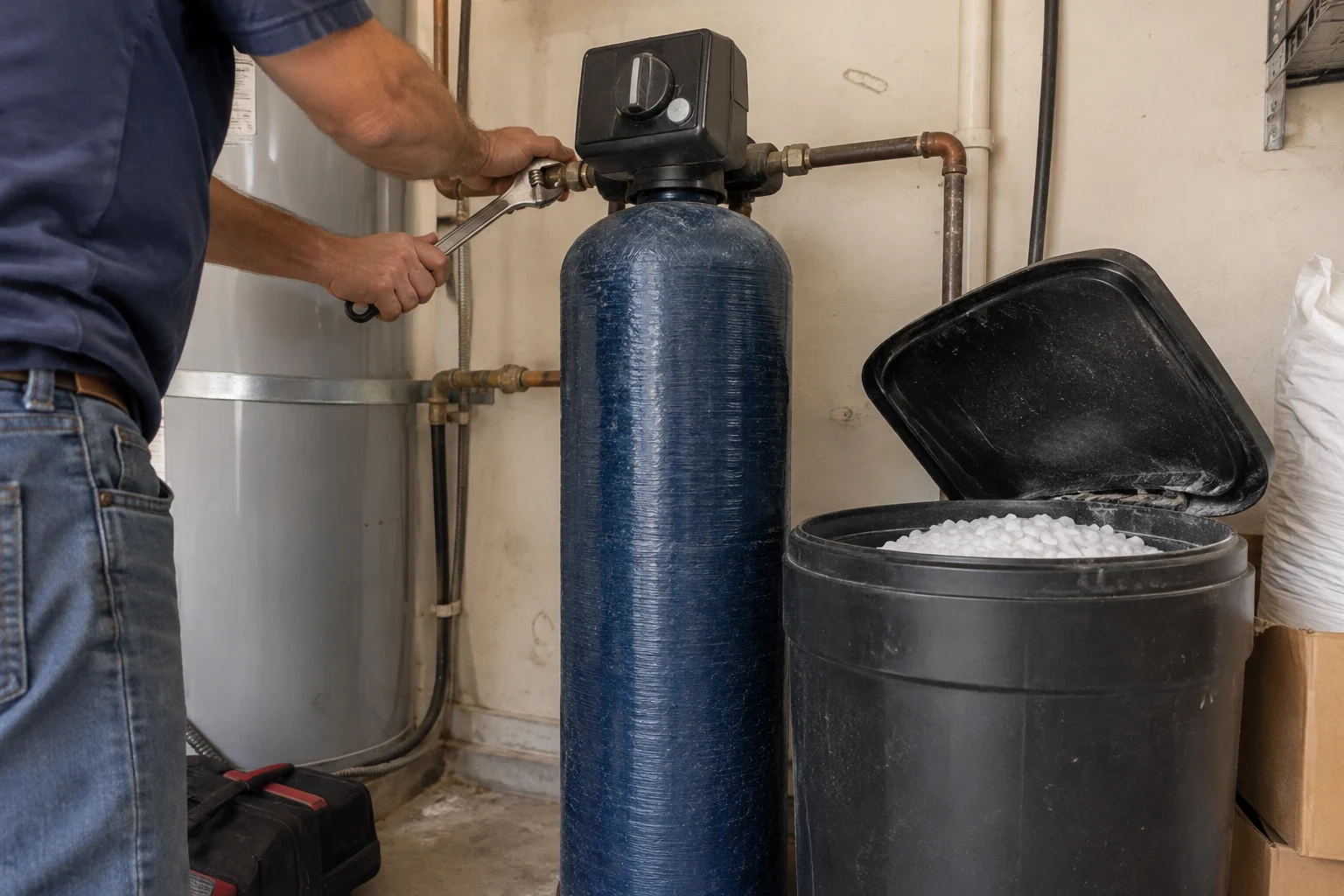
ServicesWater Softener Installation
Water Softener Installation in Lakeway
Before we recommend any softener, we test the water coming into your home and go over the hardness reading with you. The tank and resin are matched to that number, then plumbed into your main line. If softening isn't worth it for your water, you hear that first. Installation is free.
Is a Softener Right for Your Home
Softeners swap out the calcium and magnesium in your water so they never reach your faucets or appliances. Those two minerals cause the chalky crust on fixtures, the cloudy film on glassware and the scale that builds up in your water heater.
Around the Hill Country, water picks up minerals from limestone, so hard water is a common complaint. Still, the level changes from house to house and from one supply to the next. So we test before we quote. Your reading sets the tank size, the amount of resin and how often the unit regenerates.
A low reading may mean a salt-free water conditioner will handle it with less upkeep. If chlorine taste bothers you more than scale, whole-home filtration could be the smarter place to start. Either way, we lay out the choices in plain words.
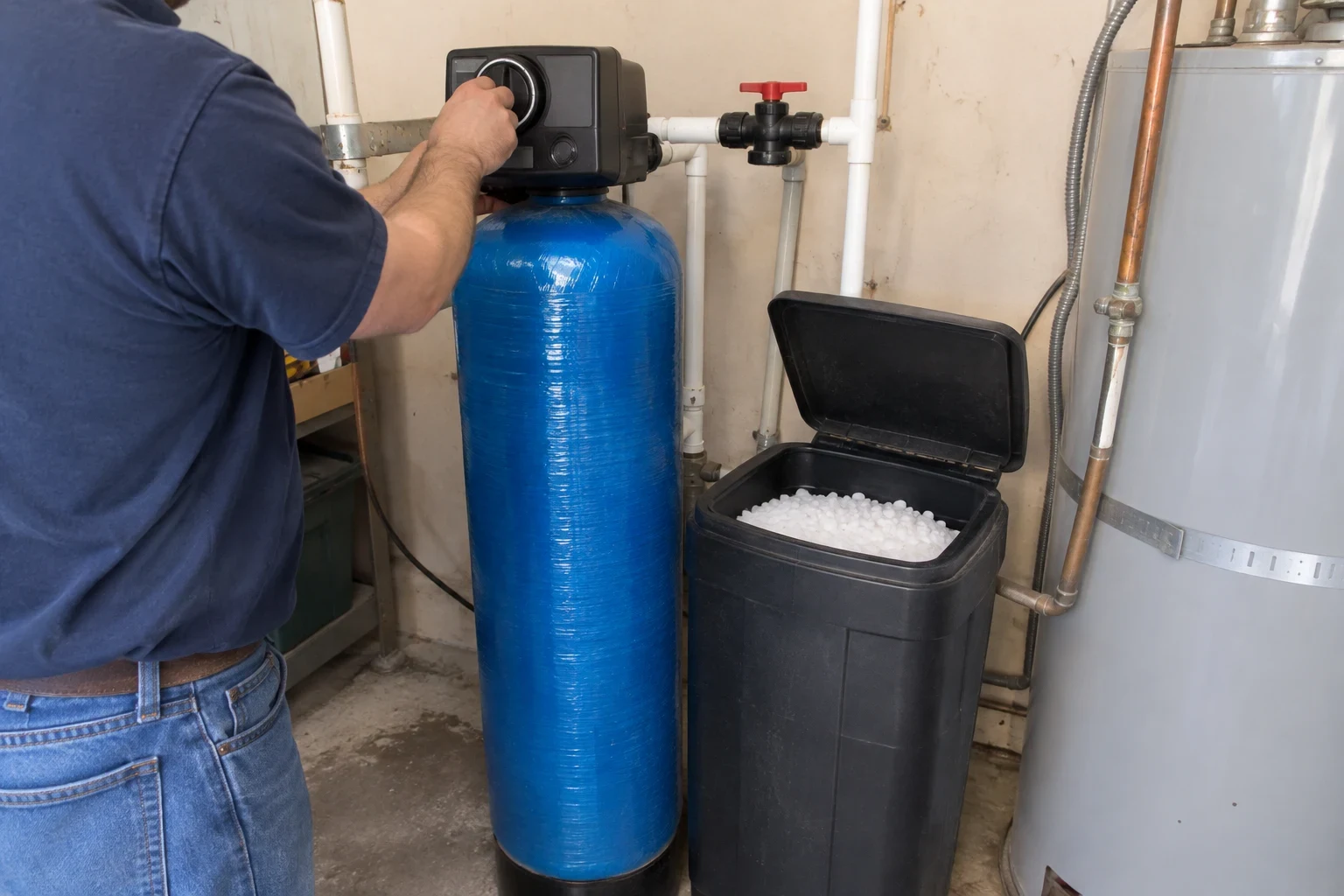
What You Get With the Install
- 01
A hardness test at your tap
Testing comes first. You watch the reading with us, and every decision after that is based on it.
- 02
A unit matched to your use
We count the people in the house, the number of bathrooms and how much water you go through in a day. Too small and you run out of soft water. Too big and you waste salt and water.
- 03
Bypass valve and main line hookup
The softener connects to your main line through a bypass valve. That way it can be taken offline for service while the rest of the house still has water.
- 04
Drain line with an air gap
We give the regeneration drain a correct air gap, so backflow can't pull dirty water into your supply. It's a cheap part that does an important job.
- 05
Programming and a quick lesson
We set the control valve to your hardness, fill the brine tank and run the first cycle. Then we walk you through adding salt and reading the screen.
- 06
We leave it clean
Floors get covered where we work, and the boxes and pipe scraps leave with us.
Questions about Water Softener Installation?
Call(512) 883-1270How to Tell You Have Hard Water
Buildup on faucets and shower heads
Chalky white residue that returns a few days after cleaning is mineral scale. Over time it plugs aerators and the small holes in shower heads.
Cloudy glasses and spotted dishes
If glasses come out of the dishwasher with a hazy film, hard water is the likely cause, not the detergent.
Soap that barely suds
Minerals keep soap from working. You go through more shampoo and still feel a coating on your skin and hair.
Water heater that pops or lags
Rumbling or crackling sounds usually mean scale has collected at the bottom of the tank. Our long, hot summers already keep water heaters busy, and scale adds to the strain.
Rough towels and gray whites
Minerals stay behind in fabric, leaving towels stiff and white clothes looking dull.
What Happens on Install Day
- 1
Test and an honest answer
First comes the free water test, plus a check of where the main water line comes into your house. You get a straight yes or no on a softener and a clear quote.
- 2
Choose the location
In most homes the unit goes in the garage or utility room, since that's usually where the main line runs. It also needs a place to drain and a power outlet within reach. We settle on the spot together before any pipe gets cut.
- 3
Plumb it in
With the water shut off, we install the bypass and the softener, run the drain line and plug in the control valve. You'll be without water for part of the visit, and we give you a heads-up first.
- 4
Set it and retest
We program the hardness and regeneration schedule, run a cycle, then test the water coming out of the unit. You get to compare the numbers from before and after.
What Sets the Cost
Because we don't charge for installation, your price is mostly the equipment plus any plumbing your home needs. You get a written quote after the test, so the number won't change on you later. These are the things that raise or lower it.
- Your hardness reading and family size
- More minerals in the water and more people using it call for a bigger tank and more resin. Nothing moves the price more than this.
- The plumbing you already have
- Some houses were built with a softener loop already stubbed out. Others need new pipe to reach the main line, and that means more parts.
- Where the drain and outlet are
- With no drain or power close to the spot, we either run them in or pick another location.
- Added treatment
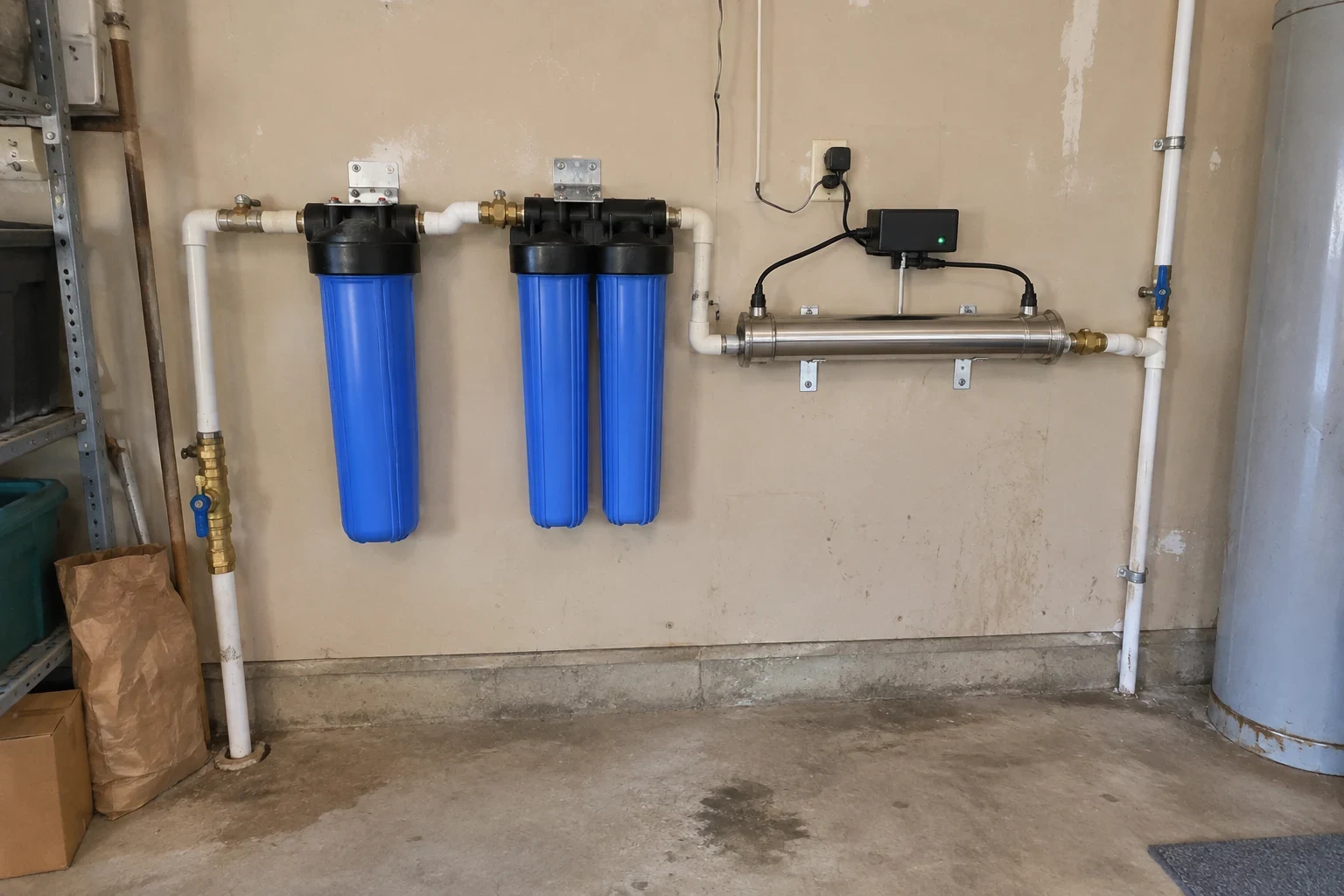
- When the test also turns up iron or a taste issue, a filter ahead of the softener may help. We bring it up only if the results point that way.
Softener Questions We Hear
Is a filter enough, or do I need a softener?
Each does its own job. A filter removes things like chlorine and sediment, and a softener removes the minerals that cause scale. Your test shows which you need, and some houses need both.
How much salt will a softener use?
It depends on your hardness and how much water your household uses. A valve set to your actual reading, not an estimate, uses less salt. We'll show you how to check the brine tank so you know when to add more.
Will softened water feel slippery?
Many people feel a smoother shower for the first few days. That's soap rinsing off fully, with no minerals holding it on your skin. Within a week or two, most stop noticing.
Would a salt-free conditioner work better for me?
Possibly. They work differently. A softener's resin removes calcium and magnesium from the water. A salt-free conditioner leaves those minerals in but changes their form so they cling less to pipes and fixtures. With high hardness, a softener usually does more, and with milder hardness a conditioner is often enough.
Will I need a permit?
That depends on your location and the work involved. If your city requires a plumbing permit for the install, we tell you before we begin and handle it as part of the job.
Find Out What's in Your Water
We will test your water, tell you straight whether a softener is worth it and quote the right size. Installation is free if you go ahead.