ServicesSalt-Free Water Conditioners
Salt-Free Water Conditioners in Lakeway
Hard water leaves chalky scale in pipes, on faucets and at the bottom of your water heater. A salt-free conditioner changes how those minerals act so less of it builds up. No salt bags, no brine going down the drain. We test your water before we suggest one.
What a salt-free conditioner does, and what it doesn't
Hard water carries calcium and magnesium. When it heats up, those minerals fall out and harden into scale. You see it as white crust on faucets and shower heads. You don't see it in the water heater, where it builds up and makes the burner or elements work harder.
A salt-free conditioner runs your water through a special media that changes those minerals into tiny crystals. The crystals stay in the water and wash on through instead of sticking to surfaces. The minerals are still there. They just behave differently.
That's the honest trade. You get far less scale and no salt to buy. You do not get the slick feel of softened water, and glass in the shower can still spot. If you want truly soft water, our water softener installation page covers that route. We'll tell you plainly which one makes sense after we test.
What's part of the job
Hardness and iron check
Before we recommend anything, we test for hardness, iron and chlorine. Iron coats salt-free media and wears it out sooner, so we want that number first.
Sizing to your flow
We size the unit by how much water your home draws at one time, not by square footage alone. Go too small and pressure drops when two showers are running.
Sediment prefilter
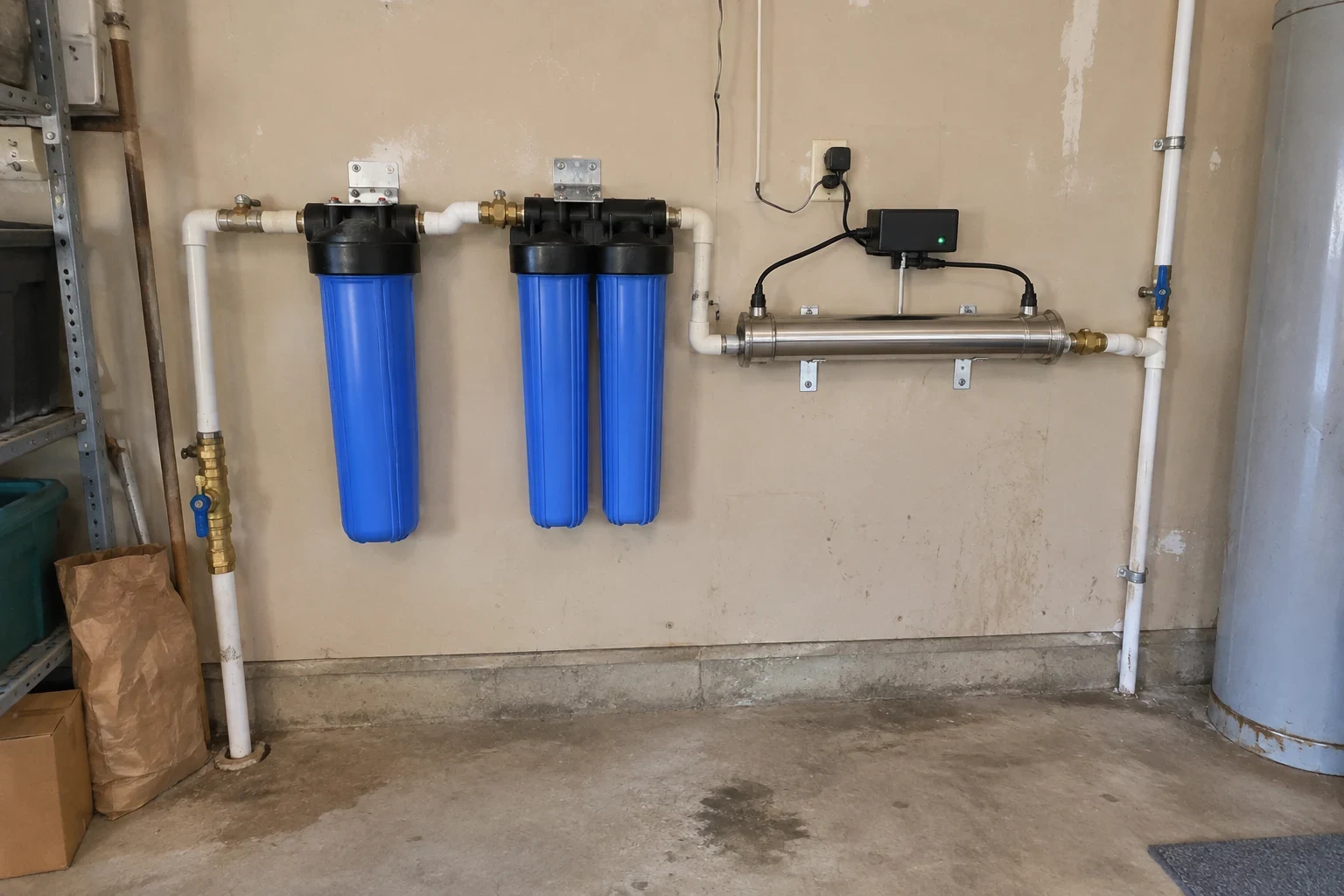
Most installs get a sediment filter in front of the conditioner. It traps grit before it can clog the media.
Clean tie-in at the main
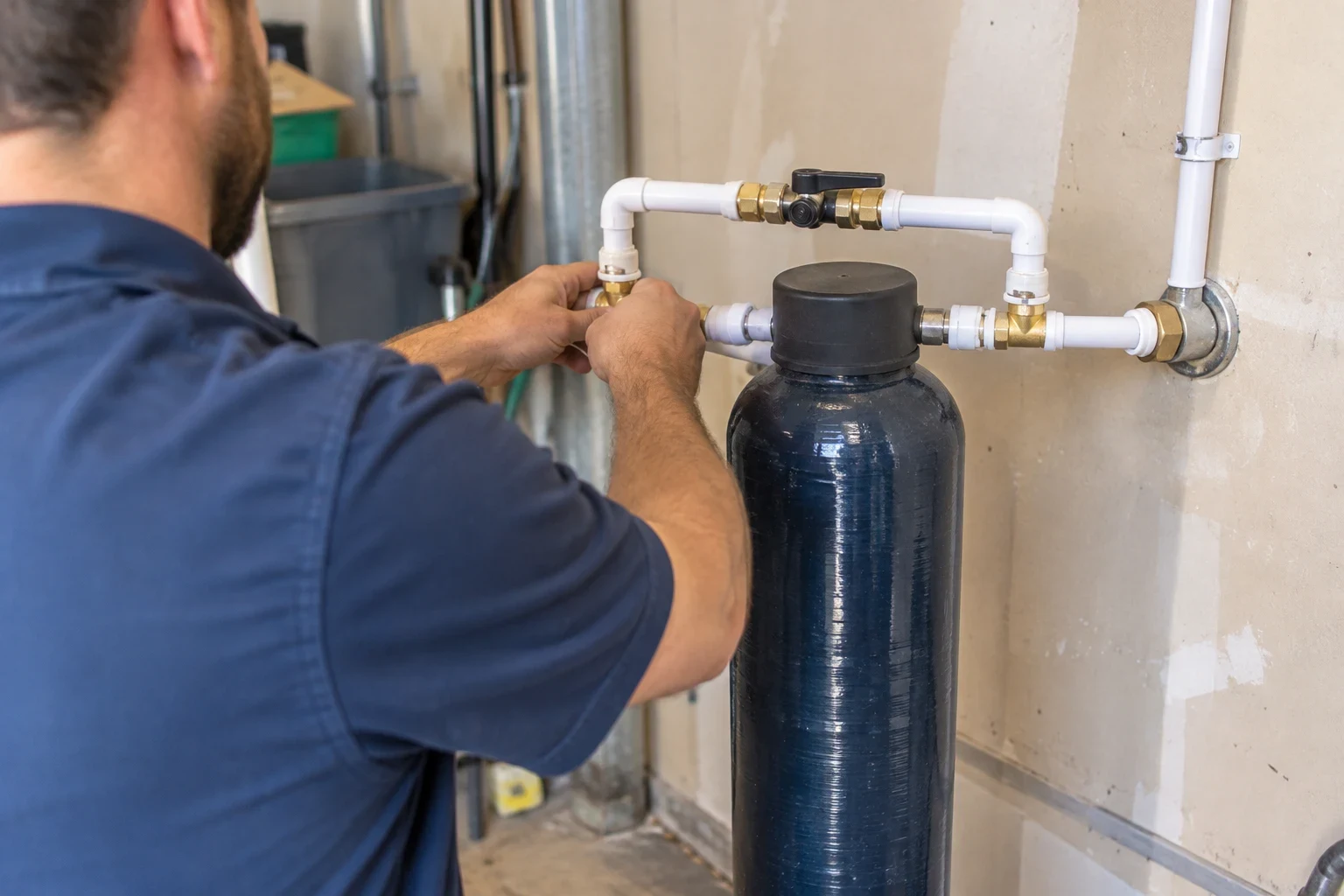
Plenty of newer homes around here already have a softener loop in the garage, which keeps the hookup simple. If yours doesn't, we tie into the main line and add a bypass valve. That way water can go around the unit for service while the rest of your home keeps running.
Walkthrough and cleanup
We show you where the bypass and prefilter are and what to keep an eye on. Then we clean the work area and take the boxes with us.
Signs a salt-free conditioner may be right for you
White crust on fixtures
Faucets, shower heads and the dishwasher door keep getting a chalky buildup. That's scale, and it's the main thing this system targets.
Water heater noise
Popping or rumbling from a tank heater often means scale has settled at the bottom. A tankless unit that needs frequent descaling is another clue.
You don't want salt
Maybe you're tired of lifting 40-pound bags, or someone in the house watches sodium. A salt-free unit adds none.
No drain near the hookup
A softener needs a drain for its brine cycle. Salt-free units don't, so they fit spots where a softener would be a hard install.
Septic system at the house
Some homes in the hills outside town are on septic. Without a brine flush, there's no salt water going into the tank.
How the work goes
- 1
Free water test
We come out and test your water at the tap. You see the numbers and we explain what they mean for scale in your home.
- 2
Straight recommendation
If a salt-free unit fits, we say so and give you a written quote. If your hardness or iron is too high for one, we tell you that too and explain the other options.
- 3
Install day
Most installs take a few hours. Water is off only while we make the tie-in. We protect the floor and work area while we're there.
- 4
Flush and check
We flush the new system, check for leaks, test pressure at a couple of fixtures and show you how the bypass works before we leave.
What sets the price
We don't charge to put the system in, so your quote comes down to the hardware and filters your water calls for. After the water test, you get the quote in writing with each part listed separately. If we find something on site that changes the plan, we talk to you before adding it.
- Unit size
- A house with three or four bathrooms pulls more water at once, so it needs a bigger tank than a smaller home.
- Prefilters
- Most jobs include a sediment filter. Putting a carbon stage up front to take out the chlorine taste raises the total.
- Your plumbing setup
- A softener loop that's already plumbed is the simple case. Tying into the main line or fitting the unit in a cramped closet takes more parts and time.
- What your test shows
- High hardness or a trace of iron can call for a larger unit or extra pretreatment so the media lasts.
Common questions about salt-free units
Something not covered here? (512) 883-1270
Does a salt-free system make the water feel slick?
It doesn't. Calcium and magnesium are still in the water, so it feels like it does today. The change is less scale on fixtures and less buildup inside the water heater. If you want that soft, slick feel, a softener is the better choice.
Will it stop spots on my shower glass?
You'll see less hard crust, but drops that dry on glass can still leave marks. A quick squeegee after a shower still pays off. Better you hear that from us now than find out later.
Does it need power or a drain?
Most salt-free units use neither. That's part of why they fit easily in garages and closets where plumbing a softener would be a chore.
What upkeep is there?
The sediment prefilter gets changed on a regular schedule. The media inside the tank wears down slowly, and how long it lasts comes down to your hardness numbers and how much water your household runs through it. There's no salt to add. After the test, we'll tell you what to plan for with your setup.
Can it work with my tankless water heater?
Yes. Scale in a tankless heat exchanger hurts performance, so controlling it is worth doing. Look at your heater's manual as well, since some makers set their own hardness limits.
What about chlorine taste?
A salt-free conditioner leaves chlorine alone. If the taste or smell bugs you, we can add whole-home filtration, or put reverse osmosis at the kitchen sink for drinking and cooking water.
Get the numbers on your water first
Our water test is free, and once we have the results we'll tell you honestly if a salt-free unit can keep up with your water. When it fits, the quote comes in writing and we install it free.