ServicesWater Testing & Analysis
Water Testing & Analysis in Lakeway
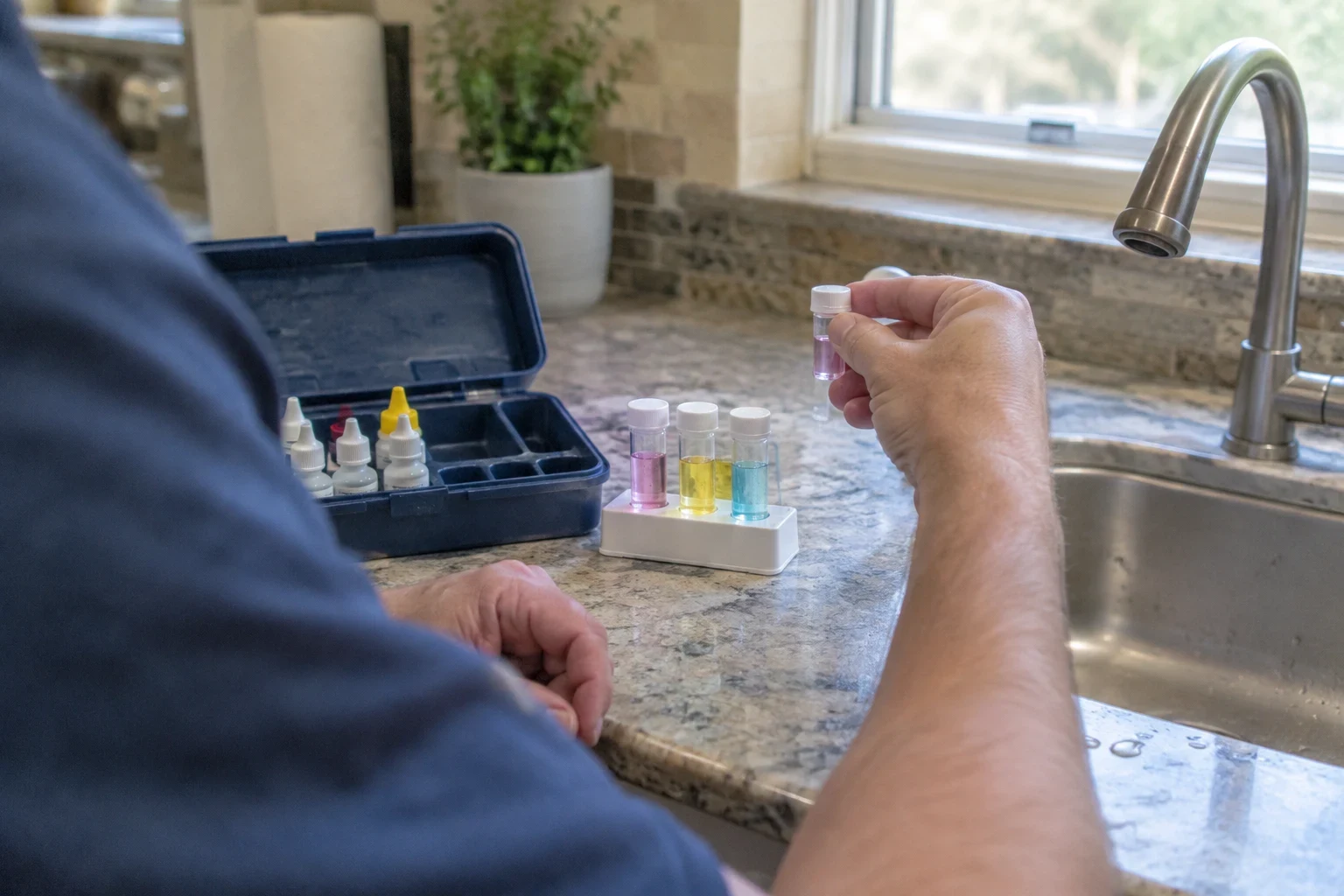
We test the water at your kitchen tap, walk you through each number and tell you plainly what is worth fixing. Sometimes the answer is nothing. The test is free, and you see the results before anyone talks about equipment.
Know what's in your water before you spend a dime
Most people call us because something seems off. Spots on the shower glass, a chlorine smell, white crust on faucet aerators, or tea that tastes flat. A water test tells you which of those is real and how much it matters, so you buy the right fix or none at all.
Water around Lakeway and the rest of the Hill Country picks up minerals as it moves through limestone, so hardness is the thing we find most often. But hardness is only one number. We also check chlorine, pH, dissolved solids and iron, because a softener won't fix a taste problem and a carbon filter won't stop scale.
Every number comes to you on paper. When the readings look good, that's what we tell you, and the visit ends there.
What the test covers
- 01
Hardness
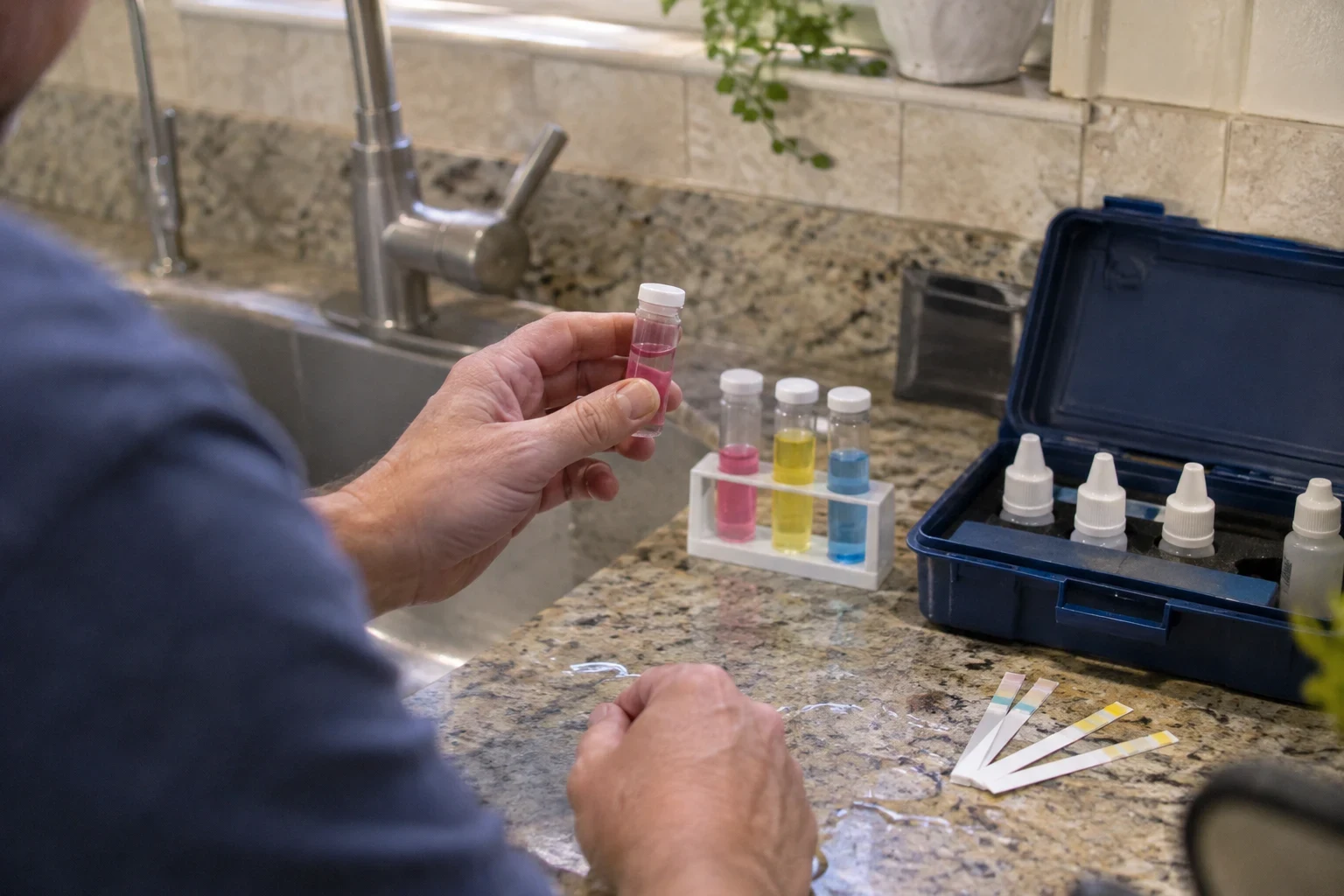
Measured in grains per gallon. This is the number that decides whether scale on fixtures and the water heater is a small nuisance or a real cost. It also tells us whether a softener or a salt-free conditioner makes sense.
- 02
Chlorine
City water is disinfected, and that's a good thing. The leftover chlorine is what most people taste and smell. We measure it so you know whether a carbon filter will actually help.
- 03
Dissolved solids and pH
TDS shows the overall mineral load. pH tells us if the water leans corrosive or scale-forming, which matters for copper pipes and for which filter media will hold up.
- 04
Iron and odor checks
Orange stains in toilets or a rotten egg smell point to iron or sulfur. We check for both, so iron and sulfur removal only comes up when your water calls for it.
- 05
Lab testing when it's warranted
Some things, like lead or bacteria, need a professional lab, not a test strip. When the pipes in your house are on the older side, or something specific is bugging you, we explain how lab testing works and help you get the sample sent off.
- 06
Written results
You keep a copy of every reading, with a short note on what each one means.
Questions about Water Testing & Analysis?
Call(512) 883-1270Signs it's time to test your water
White crust and spots
Buildup on faucets, shower doors and dishes usually means hard water. A test tells you how hard, and that decides the right fix.
Pool or bleach smell
A strong chlorine smell at the tap or in a hot shower. It's easy to confirm and usually easy to treat.
Appliances wearing out early
A water heater that rumbles, a dishwasher that leaves a film, or a coffee maker that needs descaling every few weeks. Scale is often behind all three.
Stains in sinks and tubs
Rust-colored or dark rings can mean iron or manganese in the water.
Older plumbing
If your home still has its original pipes and you've never checked, a baseline test is a sensible place to start. Plenty of homes around the lake have been standing for decades.
You're shopping for a system
Before you buy any filter or softener, test first. Otherwise you're guessing with your money.
How a test visit goes
- 1
You call and we set a time
Get on the schedule by phone. We ask a few questions about what you're noticing so we bring the right test kits.
- 2
We draw samples at the tap
Usually the kitchen sink, sometimes a bathroom too. We run the water first so the sample shows what comes into your home, not what sat in the pipes overnight.
- 3
We go over the numbers with you
Right there at your table. We explain each reading in plain words and tell you what's normal for water in this area.
- 4
You get a straight recommendation
If a problem is worth treating, we name the system that matches your readings, explain the reasoning and price it out for you. If nothing needs fixing, we pack up and go. No follow-up calls pushing a sale.
What the test costs and what can change it
The in-home water test is free. There's no charge for the visit, the readings or the talk about what they mean. Money only enters the picture if you choose an outside lab panel or decide to put in a system once you've seen your numbers.
- Lab panels
- Lab fees depend on what's being checked. A lead test by itself is a smaller job than a full panel for metals, bacteria and other contaminants. You hear the details from us before any sample gets mailed.
- Number of sample points
- One kitchen tap is the usual test. Comparing several fixtures, or checking before and after a filter you already own, adds samples.
- What the results point to
- A carbon filter for chlorine taste is a smaller job than a whole-home setup that handles hardness and iron together. Testing first keeps you from paying for treatment you don't need.
- Equipment and space
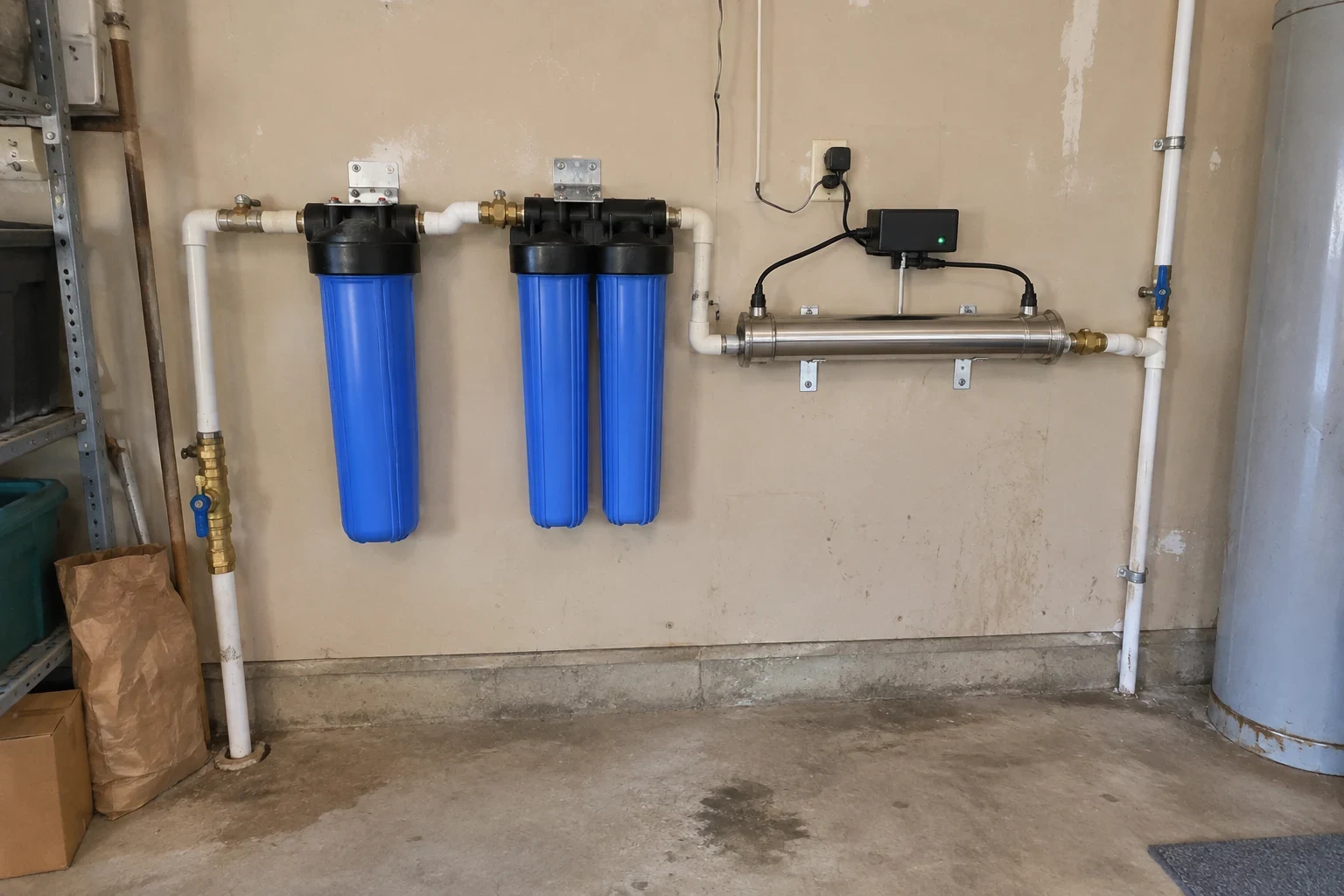
- We offer free installation. What moves a system quote is the equipment itself and how much room and plumbing access your home has where the system will go.
Water testing questions
Does the water test cost anything?
No. The visit, the readings and the explanation are all at no charge to you. You are not expected to buy anything afterward. If we think a lab test would help, we explain the reason and what it involves, and the choice stays yours.
Isn't city water already tested?
It is, and that testing is real. The utility checks water at the plant and across its system, which covers what leaves their pipes. It can't show what changes once the water runs through your service line, the plumbing inside your home and your water heater. We test what actually comes out of your tap.
How long does the visit take?
Not long. Pulling samples and getting readings moves fast, so most of our time goes to walking you through what each number means. If a lab sample is part of the plan, those results come back later, and we tell you roughly when.
Can you test for lead?
Lead needs a professional lab, because a quick home kit can't give a reading you should rely on. We help you collect the sample correctly, and the first draw after water has sat in the pipes overnight tells you the most. If the lab finds lead, an under-sink reverse osmosis system is a common way to treat the water you drink and cook with.
My neighbor has a softener. Do I need one too?
Not necessarily. How much scale bothers you and how much water your household uses differ from one home to the next. We measure your hardness and show you the number. From there we lay out water softener installation next to a salt-free water conditioner so you can choose what makes sense.
What should I do before you arrive?
Very little. Clear a path to the kitchen sink and to where the main water line enters your home. If you've seen stains or noticed a smell, don't clean it up first. Seeing it helps us decide what to check.
See your water's numbers first
Pick up the phone and we'll find a time that works. We run the test at your sink, explain what we find and tell you honestly if your water needs anything.